Monday, February 6, 2012

100 Concerts / Concert #8

Headline Act: U2
Touring Album: The Unforgettable Fire
Opening Act: Red Rockers
Date: May 3, 1985
Venue: The Hollywood Sportatorium. Hollywood, FL
Ticket price:  $14.50


Red Rockers (John Thomas Griffith at far right)
Do you remember Red Rockers? I didn't think so. Like U2, they started out with a Punk Rock attitude, then crossed over into pop success with their MTV hit, "China". Their core fans felt alienated by their mainstream airplay, accusing them of selling out. At the peak of their modest success they disbanded and disappeared into the ether, just another '80s group never to be heard from again.

There are many differences between hundreds of bands with fleeting fame like Red Rockers and those bands with staying power like U2. Talent may be the most important difference, but there is a mysterious gumbo of timing, luck, chemistry, good management, and sheer perseverance that combine to separate the greats from the shoulda-woulda-coulda groups.  Unlike Red Rockers, U2 were laying the foundation for immense worldwide popularity in 1985. U2 were touring in support of its fourth album, "The Unforgettable Fire", but it was too soon to think that they would be around for decades.  "Pride (In The Name Of Love)" was a radio/MTV hit single for Bono and the boys as they carved out their post-"War" sound. The new album was produced with David Bowie's partner in crime, Brian Eno, and featured spacey, atmospheric songs unlike anything in their previous catalog.  It was a new, more mature sound.

In 1983, it felt like an adventure to see the relatively unknown U2. Less than two years later, they were the "flavor of the month" and it was easy to assemble a group of 8-10 friends for their show. We were high school seniors, only weeks from graduating. Any excuse to gather together, have a few beers and catch some live music sounded like a great time. 

The arena was packed with thousands of newly converted fans, including many young women who saw Bono (power mullet and all) as one of rock's sex symbols. The big show-stopper was "Bad", Bono's emotional rant about the evils of heroin addiction. Bono has commented in other shows that the song is about a friend of his, Gareth (later name-checked in the U2 song "Peace On Earth"), who overdosed and died from a night of shooting smack. Bono's extended ad-lib on "Bad" gave him room to take command of any venue (such as "Live Aid" just months after this show). His 1 and 2-line snippets from Classic Rock songs ("Ruby Tuesday", "Walk On The Wild Side", and others) were a very non-Punk tip of the cap to those rock pioneers who had helped pave the way for U2. It also served notice that U2 saw themselves on the same path, with a similar attitude as The Rolling Stones, Lou Reed, and some of their heroes. They weren't content to pay homage to their rock gods. Bono was serving notice that U2 were coming to stand along side them. Eventually.
Unforgettable, that's what you are...

My second U2 show was bittersweet.  There was a brief window of time after the 1983 U2 concert when I felt like I had my own super-cool secret band, and now suddenly they were popular. As the albums, tours, and years have rolled past I learned to let go of that misguided sense of ownership. They never were actually "my" band. I realized I had to share. 

Some fans abandon their favorite artists as soon as they get too popular, like dumping a girlfriend who was once subtly cute but has now blossomed into Homcoming Queen. These fans ("dumpers") break up with their band/girlfriend so they can discover that "first kiss" moment again. They move on to next hidden treasure band and start to date them, only to dump and repeat. For me, U2 always felt like a long-term relationship. I've never had the urge to "Walk On". 'Til death do us part. 

Cowboy Mouth (JTG on the far right)
It turns out that John Thomas Griffith, the lead singer and lead guitarist of Red Rockers, went on to form Cowboy Mouth. The Louisiana-based band has had a solid career wth over a dozen albums and a rabid following for their southern-rock-party-blues-band style. No matter his recent success, I'm guessing JTG (as his fans call him) doesn't mind letting some people know that back in the day, a generation ago, he and his band opened for U-fricking-2. Now that's truly Unforgettable.

Unofficial setlist: 11 O'Clock Tick Tock, I Will Follow, Seconds, MLK, The Unforgettable Fire, Wire, Sunday Bloody Sunday, The Cry, The Electric Co., A Sort Of Homecoming, Bad, October, New Year's Day, Pride (In The Name Of Love), Encore: Knockin' On Heaven's Door, Gloria, 40

Sunday, February 5, 2012

100 Concerts / Concert #7

Headline Act: Roger Waters
Touring Album: The Pros And Cons Of Hitch Hiking
Opening Act: none
Date: April 13, 1985
Venue: The Hollywood Sportatorium. Hollywood, FL
Ticket price: $15.00

“The band is just fantastic, that is really what I think. Oh, by the way, which one’s Pink?” 
– "Have A Cigar" (1975)

Early Floyd: Roger Waters, Nick Mason, Syd Barrett, Richard Wright
Most music fans assume the question above was a dig at fat-cat record company execs who were too busy counting their millions to learn or care about the musicians who made them rich. But perhaps the query was directed inward at the members of Pink Floyd who struggled to determine the answer to the real question: "Whose band is it anyway?"

In their formative years, Pink Floyd was unquestionably Syd Barrett’s band. Wearing their LSD on their sleeves, The Floyd's psychedelic multimedia performances influenced many other artists in the late ‘60s London club scene. But it was all too much, too soon, and too intense for Barrett who took an infamous drug-fueled cliff dive into the abyss of Insanity and Schizophrenia. It was a one-way ticket for Syd who lived a hazy, mysterious existence until his death in 2006.

David Gilmour (2nd from left) replaced Syd Barrett
As Barrett slipped away, David Gilmour joined the band.  Though he was a talented guitarist and singer, he would prove to be no match for bassist Roger Waters, the eventual Alpha Dog of the group. Waters flexed his considerable creative muscles over most of the band’s post-Barrett career. 

Despite their differences in musical direction and personalities, Waters and Gilmour led the band through the writing and recording of the legendary "The Dark Side Of The Moon” (1974), the haunting Barrett-inspired  “Wish You Were Here”(1975), and the caustic “Animals” (1977). By the time “The Wall” (1979) and “The Final Cut” (1983) were released, the band was in shambles. Waters was the band's creative pacesetter, plowing ahead as his bandmates struggled with drugs, divorce, and other issues. "The Final Cut" was essentially a Waters solo album. Throughout the band’s roller coaster of enormous success and bitter personality clashes, one thing was constant - Roger Waters was Pink.

Inevitably, Waters left the band. Despite his protests and legal wrangling, the rest of the group (Gilmour, keyboardist Rick Wright, drummer Nick Mason, and several session musicians) recorded and toured with “A Momentary Lapse Of Reason” (1987) and “The Division Bell” (1994).
Mr. Pink, before Steve Buscemi

Once he was post-Floyd, Waters released “The Pros And Cons Of Hiitchhiking” (1984), a complicated album, never intended to be radio-friendly. Told in "real time", the songs (with their time-stamped titles) weave a story of life on the road as seen through the eyes of one man. "Pros And Cons"' is a microcosm of much of Waters' songwriting: mysterious, angry, humorous, beautiful, and dark.

I had not digested this album properly by March of 1985, but being a Pink Floyd fan I was intrigued to see Waters perform.  The 1982 Alan Parker film of “The Wall” was a favorite Midnight Movie at our local AMC theatre (“Stop that dog!”). My group of friends and I spent many non-sober hours trying to make sense of "The Wall"s themes and lyrics. Though my pre-college Floydian knowledge was incomplete, we knew we were in store for a great show from Waters.  Eric Clapton was the guitarist on the album and for the U.K. portion of the tour, but we were not as fortunate, instead Andy Fairweather-Low handled Slowhand’s duties. Also in Waters' touring band was saxophonist Mel Collins, who has played with The Rolling Stones, Dire Straits, Bad Company, The Alan Parsons Project and others.

Waters' alter-ego, "Reg", from the "Pros & Cons" album art
The first of the concert's two sets was all Pink Floyd material, and the crowd ate it up. In the second set, Waters did something I had not witnessed before, and very few times since. He played his album.  Not a few songs or a 5-song sampling. He played the entire f-in' album. To pull this off you have to be an established act. You have to be ultra-confident in the message and style of your material. And you have to not give a shit whether or not you are boring the audience.  Roger Waters had huge balls. He was Pink, after all.

It was a stunning performance of an expertly crafted piece of music, marked by dramatic highs and lows.  This show solidified me further as a Floyd fan and was the first of three memorable shows I have been fortunate enough to see Roger Waters play.

The original "Pros And Cons" album art seen here featured the bare behind of a blonde woman, hitch hiking by the side of a road.  This image ignited a controversy as some people accused the record company of advertising rape. Columbia Records eventually released a censored version of the cover with a black rectangle covering the model's best assets. By today's standards of pop culture (virtually R-rated primetime sitcoms and X-rated pop & hip-hop songs), this album cover seems as innocent as the married Lucy and Ricky Ricardo having separate beds on "I Love Lucy", it's almost Puritanical!

Unofficial setlist: (Set 1) Welcome To the Machine, Set the Controls for the Heart of the Sun, Money, If, Wish You Were Here, Pigs on the Wing (part 1), Get Your Filthy Hands Off My Desert, Southampton Dock, The Gunner's Dream, In The Flesh, Nobody Home, Have A Cigar, Another Brick in the Wall Part 1, The Happiest Days Of  Our Lives, Another Brick In The Wall Part 2,  (Set 2) 4:30 AM (Apparently They Were Travelling Abroad), 4:33 AM (Running Shoes), 4:37 AM (Arabs with Knives and West German Skies), 4:39 AM (For the First Time Today, Part 2), 4:41 AM (Sexual Revolution), 4:47 AM (The Remains of Our Love), 4:50 AM (Go Fishing), 4:56 AM (For the First Time Today, Part 1),4:58 AM (Dunroamin, Duncarin, Dunlivin), 5:01 AM (The Pros And Cons Of Hitch Hiking, Part 10), 5:06 AM (Every Stranger's Eyes), 5:11 AM (The Moment of Clarity) (Encore) Brain Damage / Eclipse

Saturday, February 4, 2012

100 Concerts / Concert #6

Headline Act: Rush
Touring Album:Grace Under Pressure
Opening Act: none
Date: March 15, 1985
Venue: The Hollywood Sportatorium. Hollywood, FL
Ticket price: $14.00
  "Begin the day with a friendly voice, a companion unobtrusive. Plays that song that's so elusive and the magic music
makes your morning mood.

Off on your way, hit the open road, there is magic at your fingers. For the Spirit ever lingers, undemanding contact
in your happy solitude."

"The Spirit Of Radio" from "Permanent Waves" (1980)

Long-haired freaky people, 1974 publicity photo.
In my middle and high school years, Rush fans were easy to spot. They were teenage boys (never girls) who typically had long hair and smoked (both cigarettes and pot). They were the older kids hanging out at the video game arcade or the bowling alley. They were the dudes leaning on the chain-linked fence before school, planning where to cut class. We called them "burnouts", but their musical tastes were smarter than I realized.

Great Rock Doc, a must-see for any fan.
I first caught the Rush bug when "Tom Sawyer" hit the radio and I soon connected the dots to their earlier work ("Fly By Night", "Closer To The Heart", "Working Man") that was played on FM radio, WSHE (She's Only Rock And Roll!). Rush had dipped their brush into the palette of progressive rock (lengthy musical exploration without pop music's conventional structure), painted with strokes of early '70s metal (Black Sabbath, Deep Purple) and fine-tuned their art with articulate, thoughtful lyrics that rival any rock group. On the outside, they were long-haired, heavy sounding and mystical in message. On the inside they were educated, humorous, and two-thirds "Nice Jewish Boy" (lead singer & bassist Geddy Lee and guitarist Alex Lifeson are Jewish, drummer Neil Peart is not). 

Already a major rock act before MTV, their videos exposed them to a mainstream audience with "New World Man" and "Subdivisions" from "Signals" (1982). Their 1984 release, "Grace Under Pressure" was another step in their songwriting development, a quality album but a departure for Rush, produced with '80s influences of more prominent synthesizers and electronic drums.

My buddy Brian (not a burnout) had been a Rush fan long before me. He turned me on to their concept album, "2112" (1976), which we managed to weave into a creative "film concept" project for school. Yeah, we felt cool about this. By the time Rush came to The Sporto in 1985, we were plenty jacked up to see them perform.
Neil Peart, Drum Major.

It's rare when a rock band's most legendary member is its drummer, but Neil Peart is a unique talent. As documented in the recent excellent Rush documentary "Beyond The Lighted Stage", Peart has a shy, quiet personality away from the stage. In concert, Peart is simply a force of nature.  The rock concert drum solo is often considered a self-indulgent cliché, but Peart elevates the act to an exquisite display of rhythm and showmanship.  As he began his solo, Peart's riser elevated above the stage, the entire drum kit rotated 360 degrees as he played.  I remember the incredible visual of Peart playing with his kit nearly perpindicular to the stage as we got a great view of his lightning-quick hands and gifted percussive skills.  Peart's lengthy drum solo brought the crowd to its feet. We knew we were in the presence of a legend in the making.

True Bromance: "I Love You, Man"
In the movie "I Love You, Man", Paul Rudd tries to explain his passion for Rush to his fiancee, Rashida Jones. He plays a song and is met by her complete disinterest and puzzlement. This scene perfectly captures Rush's general appeal to women, which is none.  Whether it's their lack of "rock star" sex appeal or their lack of songs about love and romance or something else, ladies don't seem to get Rush, and that's fine. Just the way Rudd and his bromance buddy (Jason Segel) enjoyed some male bonding in the movie, Rush concerts are a boys' club. They're a place where the burnouts and the geeks and the college kids and the aging hipsters can play some air guitar and jam with one of the greatest rock groups in history.  "Happy solitude", indeed.

Unofficial setlist: The Spirit Of Radio, Subdivisions, The Body Electric, The Enemy Within, The Weapon, Witch Hunt, New World Man, Between The Wheels, Red Barchetta, Distant Early Warning, Red Sector A, Closer To The Heart, Afterimage, YYZ, 2112 Part II: The Temples Of Syrinx, Tom Sawyer, (Encore) Red Lenses (with drum solo), Vital Signs, Finding My Way, In The Mood

Friday, February 3, 2012

100 Concerts / Concert #5

Headline Act: Elton John
Touring Album:Breaking Hearts
Opening Act: none
Date: October 14, 1984
Venue: The Hollywood Sportatorium. Hollywood, FL
Ticket price: $15.75
Ooh la la! Sasson!
"And I'm gonna be high as a kite by then...."

It's not uncommon to smell pot being smoked at a concert. When you're 16 and you sit behind adults who are passing a joint and you recognize them as friends of your parents? Well, that's damn confusing. My friend Brian experienced this exact situation when we went to see Captain Fantastic, The Pinball Wizard, the legendary Elton John.  I mean do old people (in their forties) smoke pot? That's just weird.
How do you think he does it?
I'd grown up with much of Elton's music, thanks to my sister who often played "Don't Shoot Me, I'm Only The Piano Player", "Captain Fantastic And The Brown Dirt Cowboy" and other LPs. Elton had emerged from the early '70s singer-songwriter boom, thrived in late-'70s disco with "Philadelphia Freedom" and was now getting some pre-VH1 heavy rotation on  MTV with "I Guess Why They Call It The Blues" and "Sad Songs (Say So Much)", the latter was the big single on this tour.  Elton has made some fine records in the years since, but if his career had ended in '84 he would still have earned a major place in rock history.
Trippy cover, great album.
If you look carefully at the ticket stub at the top of this post, Elton was one of the first artists to have a corporate sponsor's name attached to his tour. In this case, Sasson (designer jeans) was a "perfect fit" as the sponsor. Elton made the ultra-smart / ultra-cheesy move of converting "Sad Songs" into a TV commercial, changing the words to "Sasson Says So Much". Surprisingly, this commercial seems to be one of the few videos unavailable on YouTube or anywhere on the web. This concert sponsorship trend began in 1981 when Jovan (perfume) paid The Rolling Stones $1 Million to sponsor their tour.  Apparently Keith Richards' Heroin sponsorship fell through.


At 37, Elton was still a young man and had great energy during the show we saw, especially during "Bennie And The Jets" and "Saturday Night's Alright...".  His band was composed of musicians who had performed with Elton for years, they had the chemistry that a band achieves by playing hundreds of gigs together. Check out the setlist below, there are at least a dozen classic songs, just part of an incredible catalog from John and lyricist Bernie Taupin.  One of those songs, "Rocket Man", has been the subject of much scrutiny, thanks in part to William Shatner's unforgettable interpretation at The Science Fiction Awards in 1978.  If you've never witnessed this magic, please drink in the glory that is the Shatner experience! 


Unofficial setlist: Tiny Dancer, Levon, Lil 'Frigerator, Rocket Man, Daniel, Restless, Candle In The Wind, The Bitch Is Back, Don't Let The Sun Go Down On Me, Who Wears These Shoes, Sad Songs (Say So Much), Sorry Seems To Be The Hardest Word, Bennie And The Jets, Philadelphia Freedom, Blue Eyes, I Guess That's Why They Call It The Blues, Kiss The Bride, I'm Still Standing, Your Song, Saturday Night's Alright For Fighting, Goodbye Yellow Brick Road, Crocodile Rock

Thursday, February 2, 2012

100 Concerts / Concert #4

Headline Act: Yes
Touring Album: 90125
Opening Act: Berlin (scheduled but a no-show)
Date: April 21, 1984
Venue: The Hollywood Sportatorium. Hollywood, FL
Ticket price: $12.75

If Yes is the answer, what is the question? Before "90125", Yes had achieved success in an unconventional fashion. They had released 12 studio/live albums built on new-age lyrics, classical orchestration, acoustic guitar, a strong bass/drums rhythm section, heavy use of synthesizers and one of the most distinctive singers in rock history. Six of their albums cracked the top-10 on the U.S. charts despite music that was not considered radio-friendly. Many songs lasted 10 minutes or more, none of which utilized the verse-chorus-verse pop formula.
Early Yes lineup: Steve Howe, Tony Kaye, Chris Squire, Jon Anderson. Bill Bruford
They built a loyal fan base and a reputation as a musically gifted band but they were widely considered pretentious and self-indulgent by rock critics.  Labeled "progresive rock", Yes was lumped together with early Peter Gabriel-era Genesis, Emerson, Lake & Palmer, and King Crimson.  These "prog rock" artists were influenced by the late '60s psychedelic wave of musical and chemical experimentation Yes added a more refined musicianship to the style. Despite their critics, Yes did have a few songs on FM Radio, such as "Roundabout", "Starship Trooper", "Long Distance Runaround", and "Yours Is No Disgrace".  To me, these complex, mysterious songs jumped out of the radio and needed multiple listens to digest properly. What does it mean when "mountains come out of the sky and stand there"? 

One of my early impressions of Yes was their image, not as "rock gods" but their pre-MTV image that arose from Roger Dean's fantasy-inspired art. Dean created many album covers for Yes, some of the most beautiful in rock history (as well as Asia's successful debut) . Yes' iconic logo  reinforced their eclectic, esoteric and mysterious image.  They emerged from their '70s shroud of mystery with a 1983 MTV video, "Owner Of A Lonely Heart", which created controversy and had to be re-edited for containing some disturbing imagery.  The song was a huge hit, their first and only #1 U.S. single, a real game-changer for a band of their stature and history.


I was a fan of their earlier work (the 5 or 6 songs I heard on the radio), and "90125" was a new album worthy of attention. My friends and I devoured the entire album (when it was still the norm to listen to entire albums and not cherry-pick singles like these crazy kids today).  I mean, back in my day....blah blah blah. Like much of their earlier work, "90125" was beautifully produced and contained many unconventional compositions such as "Changes","It Can Happen" and "Leave It". These were multi-layered songs that demanded repeated listens and we obliged.
90125 > 90210
With their strong new '80s release and their '70s catalog, my friends and I jumped at the chance to see Yes in concert. 
We arrived at the Sporto for the show, but my buddy Dave had temporarily lost our tickets! After a frantic search they were found inside the car and we scrambled to get inside. While entering the gates of the arena, we heard the music start and were just able to get to our seats without missing very much.  The scheduled opening act, Berlin ("The Metro"), failed to appear so there was a brief Bugs Bunny cartoon instead (thanks to my buddy Tim for that memory jog).  As part of my concert routine, I make every effort to be in my seats before the show starts, even if I have to sit through an opening act I don't particularly know. This habit has paid off with some memorable opening acts (more on those in future posts).
Jon Anderson & Lord Of The Bass: Chris Squire

Fragile (Roger Dean cover)
While their records are great to listen to, in concert Yes is an incredible quintet of power and precision. Chris Squire is one of rock's all-time greatest bass players, he commands the stage with a regal presence in long, flowing robes that drape his large frame. Squire has the distinction of being a founding member of the band and the only man to play on every Yes album.  During Yes concerts, Squire puts on a solo bass display, where he show off his prodigious talents. He is one of the very few bass players who deserves this type of spotlight.

Over the years, Yes has had almost as many lineup changes as Spinal Tap (but thankfully no need to dust for vomit). On the "90125" tour, young singer-songwriter-guitarist Trevor Rabin had replaced Steve Howe. Original Yes keyboard player Tony Kaye was back with the group after a 12-year hiatus, a position filled more notably by Rick Wakeman (more on him in future posts).  Alan White was the drummer as he had been for most of the band's career, the original drummer was Bill Bruford.
Tales From Topographic Oceans (Roger Dean cover)

The most recognizable aspect of Yes is the voice of lead singer Jon Anderson who has appeared on all but 2 of the group's albums.  The circumstances of his recent replacement in the band is a fascinating story, one to be shared down the road. In concert, Anderson has an effortlessly angelic voice and a boundless spirit that elevates the music with an other-worldly quality.  When he tells the audience between songs something like "It's so beautiful to be with you tonight", you can tell he really believes it.  Listening to him sing, you understand why the mountains come out of the sky and stand there, it's to hear him sing.

Very few bands in rock history can boast their musicianship and originality. Their albums have withstood critics and the test of time. In concert, their music is cinematic, moving, ethereal, and for hardcore fans a true joy to witness.

Isn't it time for them to be inducted into the Rock And Roll Hall Of Fame? The answer of course? YES.

Unofficial setlist: Cinema, Leave It, Yours Is No Disgrace, Hold On, Hearts, I've Seen All Good People, Si, Solly's Beard, Changes, And You And I, Soon, Make It Easy, Owner Of A Lonely Heart, It Can Happen, Long Distance Runaround, Whitefish, Amazing Grace, City Of Love, (Encore) Starship Trooper, Roundabout

Wednesday, February 1, 2012

100 Concerts / Concert #3

Headline Act: Billy Joel
Touring Album:An Innocent Man
Opening Act: none
Date: March 15, 1984
Venue: The Hollywood Sportatorium. Hollywood, FL
Ticket price: $15.75

"Sing us a song, you're the piano man. Sing us a song tonight. Well we're all in the mood for a melody and you've got us feeling all right..."
 
We gathered together on weekend nights where the sand met the salty air. Buzzed on cheap beer and teenage hormones, guys and girls leaned on each other for support, in more ways than one. We were the performers and the audience. We sang our asses off. The band was anyone's boom box which played one cassette tape after another. We sang like our lives depended on it, and maybe they did.

"A bottle of white, a bottle of red. Perhaps a bottle of rosé instead..."

Certain artists and songs can define specific moments in your life, but very few artists serve as the soundtrack for an entire era of your life.  For much of high school and college, Billy Joel was a common musical thread for many of my friends and me.

"They say that these are not the best of times, but they're the only times I've ever known..."

It's unrecognizable, but where a swanky high-rise condo now borders a city park along the Atlantic Ocean, there was a place that mattered to us. It was just a little side street off A1A, tucked between a few acres of mangrove trees and a generic little bank. It was close to a turtle-hatching enclosure, near some condos and run-down hotels built in the '50s. This is where we would gather on dozens of Friday and Saturday nights for a few years.  Located on Hollywood beach, Sherman Street was our teenage sanctuary.  

"Little Geo is a friend of mine, we get some money and we buy cheap wine, sit on the corner and have a holiday. Hide the bottle when the cop goes by, talk about women and lie, lie, lie. My other world is just a half a mile away..."

It was a place the Hollywood police (mostly) ignored, a place we would meet after lame movies or lame parties or lame high school football games, a place where we could drink beer and just be idiot teenagers. The boom box would crank out much of the Billy Joel library ("The Stranger", "52nd Street", "Turnstiles", "Songs In The Attic") and it seemed each one of us knew every word of every song.

"Saturday night and you're still hanging around, you're tired of living in this one-horse town. You'd like to find a little hole in the ground for a while..."

We didn't care if it was considered the coolest music around, it wasn't punk or artsy or edgy or even fresh, but we felt it.  No matter the era, Billy Joel's lyrics speak the truth about love, romance, betrayal, anger, isolation, show biz, dysfunctional families, the suburbs, New York, Vietnam, rock and roll, and so much more.

"Well we all have a face that we hide away forever and we take them out and show ourselves when everyone has gone. Some are satin, some are steel, some are silk and some are leather, they're the faces of the stranger but we love to try them on..."

When I first saw Billy Joel in concert, it was a reunion with an old friend I'd never met. Thanks in part to my older siblings, I'd grown up hearing Billy from "Piano Man" (1973) all the way up through "An Innocent Man", his new album supported by this 1984 tour . "Glass Houses" (1980) was the first of his albums I digested when it was new, followed by "The Nylon Curtain" (1982), perhaps his most underrated album.

While many artists needed MTV to make their name,  Billy had already been there, Grammy'd that.  Having sold millions of records and won numerous awards, he could afford to look into his past. He crafted a love letter to his musical heroes of the '50s and early '60s with "An Innocent Man". Its musical engine was driven by the spirits of Elvis Presley, Dion & The Belmonts, Frankie Valli & The Four Seasons and the like. 

"If you said goodbye to me tonight, there would still be music left to write. What else could I do? I'm so inspired by you. That hasn't happened for the longest time..."
 
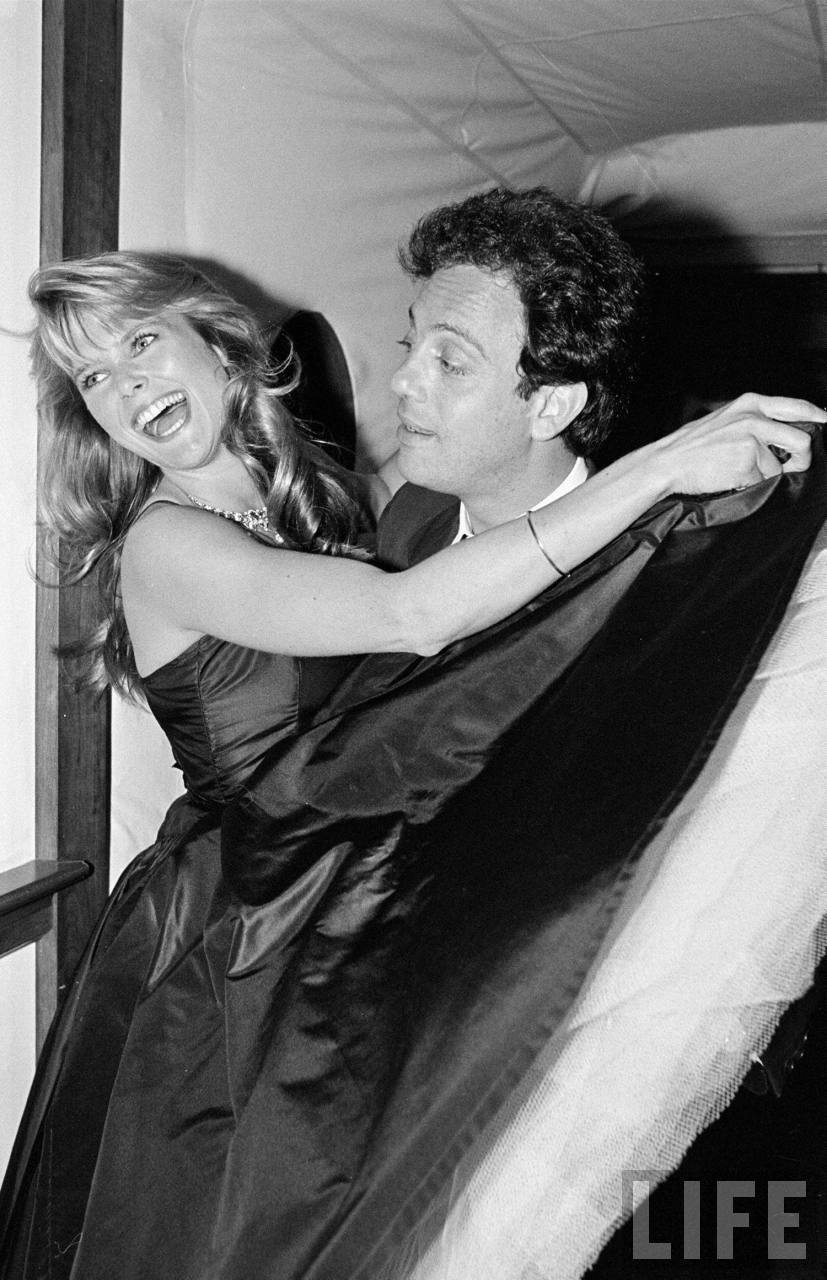
Mrs. Joel #2
In 1984, Billy was still married to the "Uptown Girl", supermodel Christie Brinkley.  With her looks and his musical charms, Billy was an MTV staple for a little while, reaching a new audience with the album's first single, "Tell Her About It", a tribute to Motown-era groups like The Supremes.

"Some folks like to get away, take a holiday from the neighborhood. Hop a flight to Miami Beach or to Hollywood. Me, I'm taking a Greyhound on the Hudson River Line. I'm in a New York state of mind..."

Billy's on-stage persona is fairly unique. He's equal parts rocker, balladeer, storyteller, jokester, smartass, and one hell of a singer/songwriter/ musician. I can't say I remember all the details of this show, but I know that 6 or 8 friends (from the Sherman Street gang) were there with me in the upper levels of the arena. And we sang our asses off.

"I am the entertainer and I know just where I stand, another serenader in another long-haired band.  Today I am your champion, I may have won your hearts, but I know the game, you'll forget my name. I won't be here in another year if I don't stay on the charts..."

Here's the unofficial setlist: Prelude/Angry Young Man, My Life, The Stranger, Piano Man, Don't Ask Me Why, Allentown, Goodnight Saigon, Pressure, Just The Way You Are, Scenes From An Italian Restaurant, An Innocent Man, The Longest Time, Stiletto, Sometimes A Fantasy, It's Still Rock And Roll To Me, Uptown Girl, Big Shot, (Encore) Tell Her About It, You May Be Right, Captain Jack, Only The Good Die Young

On a side note, this was the first of several shows I saw at the Hollywood Sportatorium, "The Sporto", accessible from a 2-lane road (now Pines Boulevard) in west west west Hollywood (present day Pembroke Pines, west of I-75). This legendary venue was the site of performances by numerous Hall Of Fame artists: Elvis Presley, Led Zeppelin, Pink Floyd, Queen, The Grateful Dead, Bruce Springsteen, The Eagles, and many more.  It was also the site of numerous arrests for drugs and weapons, overdoses, and a million other stories.
The Sporto from the outisde.

Before a 1981 Rush show, police sprayed tear gas on several fans who attempted to storm the gates, this led to some rock throwing and general chaos. The Sporto had plenty of issues over the years and the old barn was razed in 1993 following damage from Hurricane Andrew.
The Sporto from the inside.

Its fate was sealed when the state-of-the-art Miami Arena opened in 1988.  In typical South Florida fashion, the Miami Arena only lasted 20 years and was demolished in 2008, several years after the AmericanAirlines Arena opened just blocks away. Much more on those downtown venues in future posts. If you want to read more (mostly true Wikipedia) info about the infamous Sportatorium, click this link.

Tuesday, January 31, 2012

100 Concerts / Concert #2

Headline Act: The Police
Touring Album:Synchronicity
Opening Acts: Eric Burdon & The Animals, The Fixx
Date: October 28, 1983
Venue: The Orange Bowl, Miami, FL
Ticket price: $17.50
Bass Ticket Outlets and Fantasma Productions present...

The OB was the site of 5 Super Bowls (II, III, V, X, XIII)
Stadium shows are like the condoms of live music. They're awkward, they prevent the experience from going the way you'd like, and they give you the sense that you are witness to something being enjoyed by someone who is far away.

It was a Friday afternoon of my junior year of high school. My friends and I were determined to get to the Orange Bowl in Miami to see the The Police, with opening acts The Animals and The Fixx.

How do you get to and from a concert that's 30 miles away when you are in 15, in high school, don't have a driver's license and have no easy access to public transportation? Parents. Ick.

We wanted to be cool but we had to settle for being dropped off. My buddy Dan's mom gave us a lift to the old stadium, where I'd enjoyed numerous Miami Dolphins games. Now, the OB was hosting an intimate concert for 50,000.  I've seen several stadium shows since, this was the only one I saw at the Orange Bowl.

While U2 was making their name, 1983 was the year that The Police staked their claim as the biggest band in the world. By the early '80s, many big bands of the '70s (Fleetwood Mac, Led Zeppelin, and Pink Floyd) had burned out and faded away thanks to all those years of drugs, groupies, and the excesses of fame. But mostly drugs.
Police Academy, hold the Guttenberg.

The Police were the first "new wave" band of the late '70s / early '80s that had put together 5 excellent albums, while also evolving musically and gaining mainstream commercial success. They had gone from the punk-reggae hit "Roxanne" to the misunderstood radio smash "Every Breath You Take" which became one of the most popular wedding songs of all time despite being about stalking an ex-lover.

 "Synchronicity" knocked "Thriller" off the top of the album charts.
On top of their musical momentum,  lead singer
Sting looked like a movie star and was an instant MTV favorite with the girls. They had hit the big time, and were now filling football stadiums across the world.

Hey, this  tour was so big that VJ Martha Quinn was on hand to rev up the crowd, check out this MTV clip at 35:00 into the video.  I must confess I kinda had a thing for Martha.

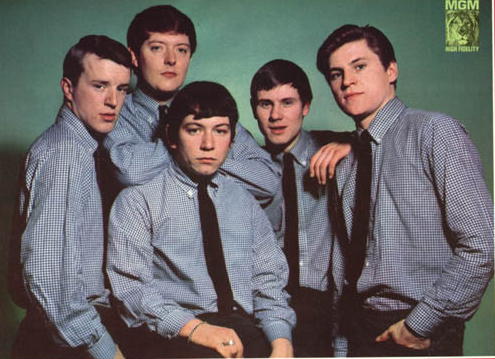
The first opening band was Eric Burdon & The Animals, 20 years removed from their British Invasion success of the early '60s. With "House Of The Rising Sun", "We Gotta Get Out Of This Place", "It's My Life" among their hits they seemed better suited for an oldies tour. While I was probably one of the few high school kids at the show who admired their catalog, I remember thinking they were old and really didn't belong at this show. I mean they were OLD! I was 15. In 1983, Eric Burdon was 42. Age is in the eye of the beholder, I guess. The Animals sounded fine, but when they came on stage around 5:30pm, the still-arriving crowd of teenagers weren't exactly captivated. They never had a chance to win over the fans, I felt bad for them.
Rare photo from Eric Burdon's Bar Mitzvah.

The second opening act was The Fixx.  They had made an MTV splash with some catchy songs and highly produced videos: "Stand Or Fall", "Red Skies", "One Thing Leads To Another", "Saved By Zero", etc.  In the U.S. they were destined to be a supporting act for other bands for many years, never making that jump into headline act.  The Fixx were the '80s version of Ned Beatty,  a talented character actor but not the leading man.

Squeal like a pig!
Always the bridesmaid, never the bridezilla.
I'd like to say I remember something about The Fixx's performance, but do you remember Ned Beatty's performance in "All The President's Men"? No, that movie had 2 movie stars, Dustin Hoffman and Robert Redford.  Well, The Police were Robert Redford (except for "The Electric Horseman", I'm pretending that movie was never made).

When The Police finally took the stage that night, Sting did so not just as the lead singer and bass player of the most popular rock band in the world. He did so also as a sex symbol and bona fide "rock star", it was a stark contrast from the persona Bono presented at the U2 show, though he surely mutated into "rock star" in later years.

They were excellent performers, Stewart Copeland is one of my favorite drummers and he's an impressive player in concert.  Hit after hit had the crowd singing along and it was certainly an enjoyable show, though maybe not the most passionate performance.  They were world-famous, ultra-successful, filthy rich... and they couldn't stand each other.  A couple years later they split up while trying to record the follow-up to "Synchronicity".  Sting's inevitable solo career and their personality differences kept The Police apart for 20 years until they realized how much money they could make with 2007 ticket prices! I also saw them on their reunion tour, but you will have to wait for that one, my friends.
The sleeveless concert T-shirt, another '80s artifact.

Aside from the music, I remember clearly that my buddy Dan met a girl - Sheri (or Shari or Sherry or Sherri or however the hell she spelled it). Can we establish a standard way of spelling certain names? Is it Kathy or Cathy or Kathie? It should be Jeffrey not Geoffrey! Jonn should never have 2 n's. Also, can we vote on certain names being male or female - but never both.  Terry, Dana, Fran, Kyle, Lee, Tracy, and Pat (it's time for androgyny!) etc., these names to get cleared up.  Thank you.

RIP Orange Bowl, now the site of the new Marlins ballpark.

Anyway,  Dan met a girl. At  the concert. So, wait a second, let me get this straight. Not only can you see great musicians perform at a show, you can also meet girls? And they may want to date you? Hey, this concert thing might be cool.  So Dan met a girl whose name started with an S and rhymed with berry.  She lived in Miami, kinda far away from our neighborhood. But Dan was way ahead of our group of friends when it came to charming women and getting his "fun-stuff touched" (as they said on "That '70s Show").  She was a short-term on-and-off girlfriend of Dan's, not a major relationship but to me that wasn't the point. The possibilities of what could happen at a concert suddenly changed.

After the show, our group of friends took a cab, we crammed into a station-wagon taxi and managed to get 20 miles north, to the HoJo's at the Golden Glades exchange. Being the big cool guys we were, we had to call my dad, Al, to come pick us up and shlep everyone home.  Being a teenager and getting picked up by your father after a concert doesn't make you feel like a man, but I learned that night, just get to the show and the rest will take care of itself. 
Sting, the movie star in "Dune" (1984).
It worked out that night for Dan, he was about to have a girlfriend for the next several months.  Just get to the show, by any means necessary.

Here is the unofficial setlist: (Set 1) Voices Inside My Head, Synchronicity I, Synchronicity II, Walking In Your Footsteps, Message In A Bottle, Walking On The Moon, Oh My God, De Do Do Do De Da Da Da, Wrapped Around Your Finger, Tea In The Sahara (Set 2) One World (Not Three), King Of Pain, Don't Stand So Close To Me, Murder By Numbers, Every Breath You Take, Roxanne, (Encores) Can't Stand Losing You > Reggatta De Blanc > Can't Stand Losing You, So Lonely

Monday, January 30, 2012


100 Concerts / Concert #1

Headline Act: U2
Touring Album: War
Opening Act: The Alarm
Date: June 23, 1983
Venue: Sunrise Musical Theater, Sunrise, FL
Ticket price: $10.75
$10.75 for this ticket. I've paid more than that for a beer at recent shows.
I was 15 and still had my virginity. With rock concerts? Check. With women? Check. I've lost it on both fronts, but this evening in 1983 was far more memorable.

The Mohawk. Objects on head are larger than they appear.
The Sunrise Musical Theater, since converted into a church, was a cozy 4,000-seat venue with very few bad seats. My brother, my very good friend Brian (still to this day) and I didn't look like many of those in attendance this night. While U2 was not a true punk band, they were cool enough to draw several hundred mohawked, avant-garde-looking concertgoers needing to be noticed for their artsy "new wave" style.  As a straight-laced kid, this felt like a pretty wild scene, I felt cooler by association and in those awkward teen years you will take a cool-boost anywhere you can.
 
Before I open a giant can of word-ass about U2, I must talk about the opening act, The Alarm, from Wales, who played as LOUD a set as I've ever seen. Their hair was higher, spikier and teasier (yeah, I made up my own words) than any group I have ever seen. Like U2, they had political and spiritual themes in their music. Among their most popular songs at that time, "68 Guns" and "The Stand". I immediately loved their energy and sound; within days of the show I  bought "Declaration", their debut LP which is still one my favorite albums of the 1980s.  
Early promo photo of The Alarm. These guys were frickin' loud and good.
Years later they had a radio hit with "Rain In The Summertime", but they broke up after just six studio albums.  In 2004, VH1 rounded up the members of the band for the awkwardly satisfying show "Bands Reunited".  As a longtime fan of The Alarm, I was emotionally invested in this made-for-TV reunion, and they still sounded really good.  If not for U2 being bigger, better, and more talented, The Alarm might have been a really big band in the '80s.

As for the performance by U2? Wow.  I don't want to overstate this - but those next 2 hours changed my life.

For me, this was a perfect storm of concert greatness. I was at an impressionable age, seeing a future Rock And Roll Hall Of Fame band on the support tour of their first significant album ("War") and first major political statement ("Sunday Bloody Sunday"). In the MTV rotation, this song stuck out like a Hell's Angel at a Girl Scout meeting.

1983 MTV, Journey's "Separate Ways" = Cheese.
Consider this quick list of some 1983 MTV hits: Hungry Like The Wolf, Electric Avenue, She Blinded Me With Science, Come On Eileen, Separate Ways, Down Under, Der Komissar, and on and on...

Those are some memorable pop songs, but all of them combined don't convey 1% of the cojones that explode out of the drums and the piercing guitars that begin "Sunday Bloody Sunday". The song is built from genuine anger and frustration stemming from years of violence in Ireland. Unlike many of the groups churning out MTV fluff, U2 brought a punk attitude to their early music (Iggy Pop and The Clash were influences) combined with some of the theatrical qualities of their musical heroes (David Bowie, The Who). Here's a classic performance of the song, captured at Red Rocks in Colorado just 2 weeks before our Florida show. This version was immortalized on the "Under A Blood Red Sky" EP and video.


According to Wikipedia (the website's motto: "Most of this shit is true."): "The band have said the lyrics refer to the events of both Bloody Sunday (1972) and Bloody Sunday (1920), but are not specifically about either event. The song takes the standpoint of someone horrified by the cycle of violence in the province. Bono rewrote The Edges's initial lyrics, attempting to contrast the two events with Easter Sunday, but he has said that the band was too inexperienced at the time to fully realize that goal, noting that "it was a song whose eloquence lay in its harmonic power rather than its verbal strength." In the 1972 incident, 26 unarmed protesters were shot,14 were killed by gunfire from British soldiers in Derry, Ireland.

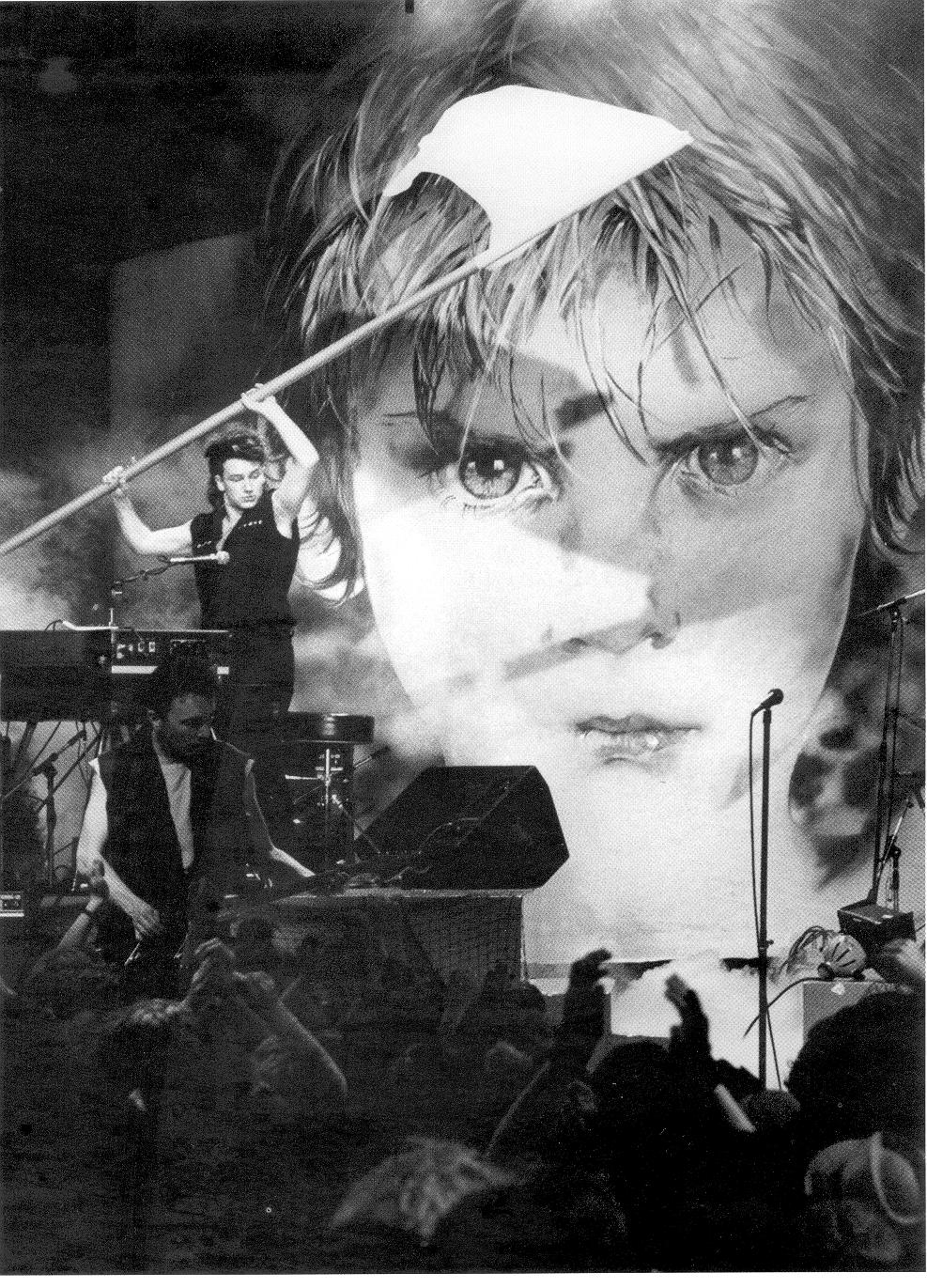
When U2 performed the song, the crowd was eating out of Bono's hands. We were chanting "NO MORE!" over and over as Bono led us on. His passion and anger were theatrical but sincere. He carried around a large white 'surrender' flag, marching to Mullen's militaristic cadence, trying to impose his will not only on the crowd but on to the culture of violence itself.

Henry Rollins is to Black Flag as Bono is to White Flag.
So here was this young band - still in their early twenties and just beginning to hit their stride.  This was like seeing a young Mickey Mantle swatting 4 home runs in a game while stealing 3 bases and making two spectacular diving catches - making it look easy, winking at the camera while walking off the field with two pin-up models. In 1952, his first full season in the bigs, The Mick hit .311, belted 23 HR's with 87 RBI - all at the age of 21. Like young Mantle,  U2 on the "War" tour was just a glimpse of greatness to come.

Back to the show. During "The Electric Co." (from "Boy"), the band moved into an extended jam. Edge noodled on the guitar as Bono worked the crowd. Without warning, Bono stopped singing, ran off the stage  and up the side aisle of the theater as spotlights followed him (without any apparent bodyguards nearby). He boldly burst into the frenzied crowd as the band played on and the spotlights shut off.  We knew Bono was somewhere among his adoring fans, but where?

The Mick, long before Jagger.
The tension was building. Moments later, the spotlights blasted awake and there was Bono, in the middle of the crowd, being supported 5-6 feet in the air by fans who were pawing at him while never daring to let him fall.  The Edge, Adam, and Larry continued to jam as the crowd body-surfed Bono back to the safety of the stage. He never appeared flustered during the risky experience. He retook the stage to finish the song without missing a beat. Like the young Mantle, he never took his eye off the ball.
During the song "Gloria" the song is stripped down to bass and percussion for a moment while The Edge slowly builds to a crescendo and the vocal chorus of "Gloria - in te domine". I must admit I'm a bit rusty on my conversational Latin, but according to Wikipeda: "Gloria in te domine / gloria exultate" translates into "Glory in you, Lord / Glory, exalt [him]". Thank you, Mr. Wiki.


Bono at the US Festival showing off some great '80s hair.

At the climax of the song, spotlights from the back of the stage shot up high and hard directly into the upper center balcony of the theater, seemingly right at our seats. The band was silhouetted from behind, it felt like I was caught directly in the spotlight at the very moment the music peaked and the crowd swooned. It only lasted for a few seconds but it felt like a perfect alignment of the planets.

Yes, I still have the original T-shirt from this show.
With the set now concluded, some fans headed for the exits. Moments later, the band returned to play "Party Girl" and "11 O'Clock Tick Tock" before leaving the stage. More fans headed for the parking lot. Again, the lads came back with their first hit, "I Will Follow", bringing down the house and walking off to thunderous applause. They were done, it seemed. As more fans left, many of us remained, wishing for more, more, more. Unbelievably, they returned again, a 3rd encore! The song was "40", the closing song from "War".  The chorus asks "How long to sing this song?" and the crowd eagerly sang along over and over.  Finally, Bono waved goodbye and left the stage. The Edge, Larry and Adam kept playing as the crowd sang in unison "How long?" The Edge retired his guitar for the night, waved farewell and walked off.
No, it hasn't fit me for 15 years. No, I will NOT throw it out.

"How long to sing this song?", we continued over the steady drums and bass. Eventually, Adam stopped his playing,  handed his bass to a roadie and waved goodbye.

"How long?", we pleaded, hoping the night would never end. Larry hammered out the beat a few more times as the crowd sang in full throat. He crashed his cymbals and bass drum one last time and disappeared.

The show was over. "How long to sing this song?", we sang and sang and sang for another minute or two.  No one wanted to leave. We had all witnessed something special, and we knew it immediately.

For the first time, I had a new favorite band that felt like my band, not my brother's or sister's.  It was an instantaneously strong connection, one that has led to many more memorable concert experiences and thousands of hours of musical enjoyment.  I will have much more on U2 later in this blog.


Here is the unofficial set list from this show: Out Of Control, Twilight, An Cat Dubh, Into The Heart, Surrender, Two Hearts Beat As One, Seconds, Sunday Bloody Sunday, The Cry-> The Electric Co., I Fall Down, October, New Year's Day, Gloria, (encore) Party Girl, (2nd encore) 11 O'clock Tick Tock, I Will Follow, (3rd encore) 40

Bono has been well-decorated and admired for his incredible political and humanitarian efforts. If you are interested in reading about his inspirational charitable work, I recommend the book "Bono" by Michka Assayas.

This series of conversations between the singer and the author cover a variety of subjects, most of which are not about music. You can't help but admire the man who has given so much effort and gained great political clout while striving to achieve the end of Africa's debt and starvation.